The Agentic AI Boom Is Over. The Commoditization Has Begun.
Agentic AI was revolutionary in 2025. In 2026, it's a checkbox feature. Here's what's actually worth building on.
On this page
Remember 2025? Every AI conference was basically “agents agents agents.” Every pitch deck had a slide about autonomous workflows. Every startup was racing to build the next ChatGPT-with-hands.
That race is over.
Not because agents don’t work. They do. But because everyone has one now. And when everyone has it, suddenly it’s not a differentiator anymore. It’s a feature. A checkbox. The wow factor evaporated faster than hype on Twitter.
So what’s actually worth building on? That’s what we’re talking about over coffee today.
The agentic boom: from text generation to actual execution
Let’s rewind 18 months. 2024 was the year of foundation models—LLMs got smarter, context windows got bigger, and everyone thought intelligence was the only bottleneck. Then 2025 hit, and we realized something crucial: generating text is easy. Making an AI actually do something in the real world? That’s the hard part.
That’s when agents went from niche research projects to mainstream. Suddenly, you could point an LLM at your APIs, give it a goal, and watch it break down complex tasks into steps: fetch the data, check the constraints, make the call, handle the error, retry. Autonomously.
Claude’s tool use got sharper. GPT got planning abilities. Open models like Llama caught up. By mid-2025, the gap between “AI that talks about your problem” and “AI that solves your problem” narrowed dramatically.
And for about 6 months, that felt magical. Companies were building agents for everything—customer support automation, lead qualification, invoice processing, code review, you name it. The demos were slick. The ROI was real.
Then the gold rush ended. Because everyone started building the same agents.
The great commoditization: when “revolutionary” becomes “expected”
Here’s the uncomfortable truth: the barrier to entry for building a basic agent has collapsed.
Pick your flavor. OpenAI Agents. Claude with tool use. LangChain. Anthropic’s API. Google Vertex. Azure. LM Studio. Even smaller open models like Llama 3.1 with function calling. They all work. They all ship reasonable results. The differences between them are getting smaller, not larger.
You know what commoditization looks like? It looks like this: in 2023, having a GPT-powered chatbot was a competitive advantage. In 2024, it was table stakes. In 2025, it was free. In 2026, no one even mentions it.
Same trajectory for agents. What was a $500k custom development project last year is now a $50k implementation. What was a competitive moat is now a checkbox on a RFP.
Boomi added agentic capabilities. Zapier added agents. Make added agents. Salesforce added agents. Anthropic published a reference implementation. Figma’s CEO talked about shipping agents. Everyone heard the same market signal: if you don’t have an agent layer, you’re yesterday’s news.
And just like that, the innovation moved one level up.
The real battleground: protocols are the new moat
Stop thinking about agents. Start thinking about plumbing.
The real innovation in 2026 isn’t in the agents themselves. It’s in how they talk to each other and to the outside world. That’s where the value is concentrating.
Think of it like this: in the 1990s, everyone built their own HTTP server. It was an advantage. Then HTTP became a standard. Suddenly, the competitive advantage wasn’t in the protocol—it was in what you built on top of it. That’s where we are with agents.
The protocol layer is everything
MCP (Model Context Protocol) is the clearest example. Anthropic released it about 18 months ago. Today, it’s at 97 million downloads. That’s 95 million more than when it started.
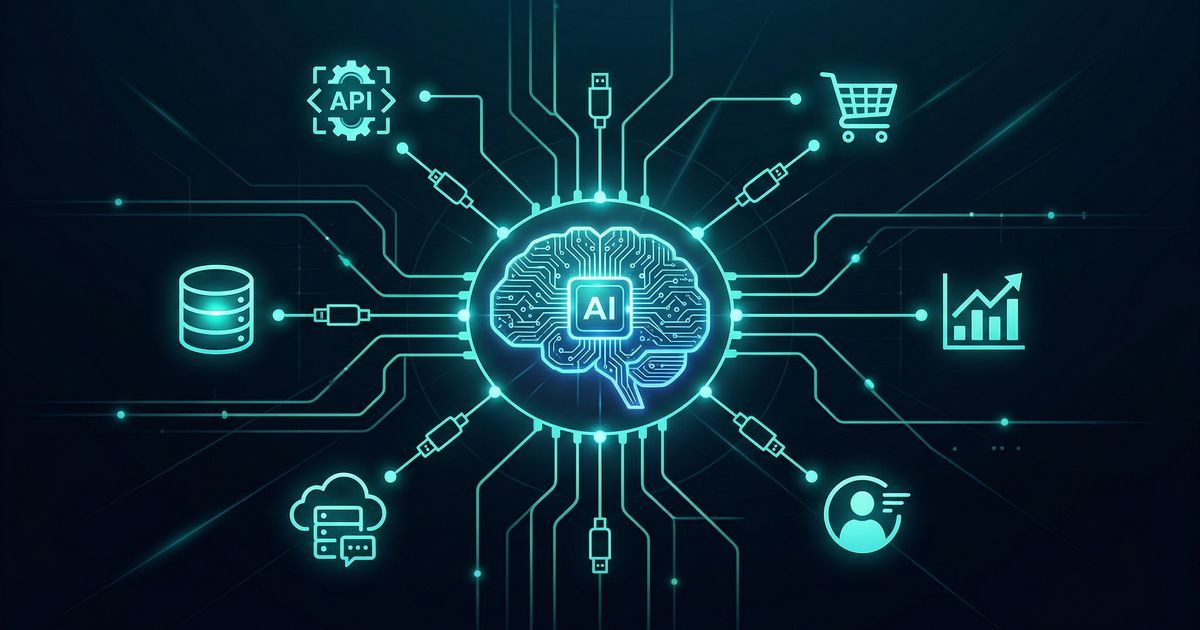
What does MCP do? It’s basically the USB port for AI agents. You define a standard way for an LLM to connect to your tools, your data, your services. Without MCP, integrating a new tool into an agent meant custom code. With MCP, it’s plug-and-play.
That matters because agents are only useful if they can touch your stuff. Your databases. Your APIs. Your business logic. If those connections are bespoke, you’re locked in to one agent framework, one LLM, one platform. But if the connection layer is standardized? You can swap out the agent, upgrade the model, or switch providers without rewriting your integrations.
That’s not a feature. That’s the foundation.
A2A (Agent-to-Agent Protocol) is next. It connects agents across organizational boundaries. Right now, each company builds isolated agents. With A2A, your procurement agent can talk to your vendor’s order-fulfillment agent securely, cross-verify constraints, settle disputes, and execute transactions without human intervention.
Sounds weird? It’s already happening in private implementations. Once it standardizes, it’s a game-changer.
ACP (Agentic Commerce Protocol) and UCP (Universal Commerce Protocol) sit on top. These handle the actual business transactions—payment authorization, inventory verification, delivery contracts. All agent-to-agent, all auditable, all happening at the speed of APIs instead of email threads.
Why this matters
Protocols aren’t sexy. They don’t get press releases. But they’re where the leverage is.
When MCP was just Anthropic’s thing, it was interesting but niche. Now that it’s becoming an open standard with implementations from every major vendor? It’s infrastructure. And infrastructure is the new moat.
Companies like Boomi, GetStream, and Commercetools aren’t building better agents. They’re building the gateways and connectors that sit underneath the agents. That’s where the defensibility is.
Infrastructure, not agents, is the new moat
This is the key insight: the value is shifting down the stack.
In 2025, the value was in the agent layer. “We built an autonomous customer service system.” Cool, but how long before someone else does the same thing with a better model and half your engineering hours?
In 2026, the value is in the infrastructure underneath. The message bus. The protocol handler. The audit trail. The failover logic. The data connectors.
Think about databases. In the 1980s, building a database was a competitive advantage. Then Postgres became free, open-source, and insanely good. So the smart move wasn’t to keep building databases. It was to build on top of databases.
Vector databases, for instance. You can slap a vector layer on top of Postgres and suddenly you’ve got semantic search for AI workloads. That’s valuable because it solves a specific problem within the broader infrastructure.
The same logic applies to agents. The smart plays in 2026 aren’t “build a better agent.” They’re:
- Build connectors. You know how to pipe your weird legacy system into the agent ecosystem? You just created a tollbooth. Companies will pay for reliable connectors.
- Build validation layers. Agents make mistakes. You build the layer that catches them, routes high-stakes decisions to humans, and maintains the audit trail? That’s compliance-grade infrastructure.
- Build cross-org coordination. Your system makes it safe for agents from different companies to transact. That’s powerful.
- Build domain-specific execution environments. Agents need to operate within constraints. Medical agents need to follow HIPAA rules. Financial agents need to verify regulatory compliance. You build the sandbox that enforces those constraints? That’s defensible.
The companies that win in 2026 won’t be the ones with the smartest agent. They’ll be the ones that made it stupidly easy and safe for any agent to do useful work.
What this means for developers and businesses
If you’re building in the AI space right now, your mental model matters.
If you’re still thinking: “I need to build a better agent,” you’re competing on intelligence. And intelligence is a commodity now. Your 6-month head start becomes a 6-week head start because the models are moving fast and the frameworks are catching up. Not a great position.
If you’re thinking: “How do I make agents useful in specific contexts?” you’re getting warmer. But you’re still building on top of commodity intelligence, which means your competitive window is still narrow.
If you’re thinking: “What infrastructure do agents need to be safe, auditable, and useful at scale?” now you’re in the game. Because the answers to that question aren’t going away. Every agent deployment needs those things. And if you solve them well, you’ve built something that stays valuable even as models get smarter.
For businesses, the implication is simpler: don’t try to build proprietary agent tech. Rent it. Use Claude, GPT, or whatever open model makes sense. Spend your engineering time on the integration layer—how those agents connect to your business, how they stay aligned with your constraints, how you build confidence in their outputs.
The suppliers are competing on infrastructure. That’s where the innovation density is. Your job is to figure out which infrastructure makes sense for your problem and build on top of it.
The execution trap
One thing to watch: the temptation to build agents that are too autonomous.
The demos are compelling. You give an agent a goal, it executes, it reports back. No human in the loop. That works great for predictable, low-stakes tasks like “summarize these emails” or “fetch the latest data.”
But most real business problems involve some combination of ambiguity, high stakes, or domain-specific constraints. Your agent can’t figure those out. It’ll make reasonable guesses, and you’ll publish them, and one day you’ll get sued.
The winners in 2026 aren’t building fully autonomous systems. They’re building human-in-the-loop systems where the agent handles the boring parts and flags the interesting parts for humans. That’s harder to demo, but it’s actually useful.
And it’s also why the infrastructure layer matters so much. You need standardized ways to route decisions, maintain audit trails, and coordinate between agent and human. That infrastructure doesn’t exist as a commodity yet. It’s the thing you’ll be building.
The future is connected, not smarter
Here’s the thing about 2026: the agents of 2025 are still pretty smart. GPT-4 didn’t get dumber. Claude still works well. The models aren’t the bottleneck anymore.
The bottleneck is connection and trust. Can this agent talk to that service? Can these two agents transact securely? Can I audit what happened? Can I set boundaries that stick?
Those are infrastructure questions. And infrastructure questions get solved through standards, not through better algorithms.
So the AI story of 2026 isn’t “smarter agents.” It’s “agents that work together.” It’s MCP hitting critical mass. It’s A2A emerging from private implementations into open standards. It’s companies building the gateways and validation layers that make that coordination safe.
The agents themselves? They’re commodities now. Useful commodities. But commodities.
The moat is in the pipes.
Build there.